
I once went on a listing appointment at a house on a hill. There were a bunch of little paths in the backyard, and one of them led to the crawl space. I probably would’ve walked right past it. The sellers took me down the path and showed me a sealed, lit space that ran under the house. You could stand up in it. It was a great spot for storage.
Now I had something to put in the marketing. “Ask about all the extra storage under the house.” I’d never have known to say that if I’d walked in, opened my laptop, and started going through slides.
That’s why I start with a tour. The listing presentation comes out when we sit down. By then I’ve seen the home through the eyes of the people who live there, and I’ve got something specific to talk about.
What I do before the listing appointment
Once the appointment is on the calendar, I send an invite and put the next steps in my CRM. Then I Google the address. I look at Zillow, Redfin, and Homes.com because that’s often what the sellers are looking at. I want to know what they’ve already seen before we talk about value. I’ll also look up the property in Realist and check the details I’m going to use in my research.
In the MLS, I look at active listings, pending listings, and closed sales. I usually start with the last six months and a mile or two, looking for similar bedrooms, bathrooms, square footage, and lot size. I pull the six to ten best matches if there are that many worth using. I also look at what buyers can choose from today. If we’re talking about a million-dollar price, what else can a buyer get for a million dollars in that area right now? How does this home stack up?
The day before, I send my pre-listing packet and confirm the appointment. Here’s what I bring with me.
- My comparative market analysis (CMA) and an estimated net sheet.
- My home seller guide and examples of my marketing.
- The listing paperwork I’ll walk through with them.
- My black box, with a thank-you card and a small gift.
Let the sellers give you the tour
I’ll ask if I can set the things I brought on the living room table. Then I’ll say something like, “First, I’d love for you to give me a tour and show me what you love about the house. If there’s anything special to you or anything I might walk right past, point it out.”
I ask if they mind if I take photos or notes. While we’re walking, I’m listening for details I can use in the marketing and looking for things we could repair, replace, or move to help the house show better. Sometimes the owners tell you about something they use every day that would never occur to you from looking at the MLS photos.
Back at the dining room table, I put my Realtor hat on and ask if they’re ready to talk business. If we haven’t already touched on it, I ask what’s motivating the move, where they’re headed, what their timeline looks like, and whether they already have an agent where they’re going. I also ask what price they had in mind and how much they need to walk away with to make the next move possible. Those last two questions can give you very different answers.
A listing presentation outline you can copy
Here’s the order I’d use if I were building a deck for my next appointment. Use examples of work you can actually deliver. Then practice it out loud until you can look up from the slides and have a conversation.
- The seller’s goals. Recap what they told you about the move and what a good outcome would look like.
- Who’s helping sell the home. Introduce yourself and the people you’ll bring in, from the photographer and stager to the transaction coordinator.
- Getting the home ready. Talk about what you saw on the tour, inside and out. Give the sellers a sense of which changes would make the biggest difference.
- Marketing and launch. Show examples of photography, video, the listing page, or other marketing you use. Explain how the remarks, photos, and video will tell the same story about what it’s like to live there. Then show how you’ll get it in front of buyers.
- The market and your price recommendation. Show what’s active, what’s pending, and what’s sold. Explain which homes carry the most weight in your recommendation and why.
- Estimated net proceeds. Walk through the price, estimated costs, and what’s left for their next move.
- Communication and next steps. Ask how they like to get updates. Then explain what you’ll need from them to get started.
Talk about the market before you talk about the number
Let’s say the sellers tell me they want $1 million, and I’ve come in with a CMA that points to $950,000. Now I know I’ve got some work to do. If it’s a buyer’s market, I’ll spend more time explaining how much choice buyers have and what happens when the people who were already looking see the home come on the market.
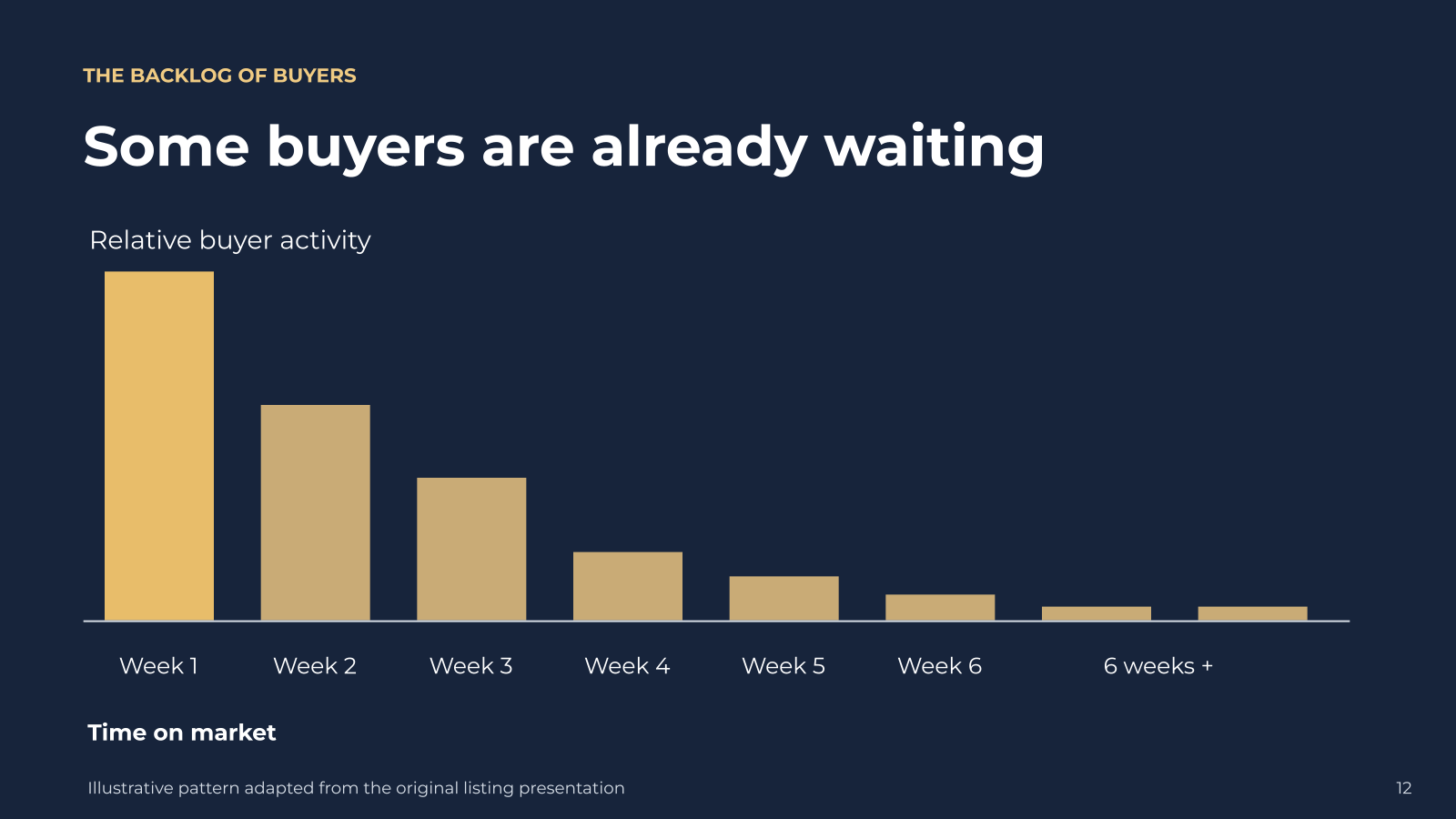
Then we go through the most relevant comps together. I’ll explain why I leaned on a particular sale or why I think buyers will compare us to a home that’s still available. By the time I say $950,000, the sellers have had a chance to see how I got there.
If they ask, “Can we just try a million?” I’ll tell them that they decide what price they’re comfortable listing at, and I have to decide whether I’m comfortable putting the time and money into launching it at that price. In a buyer’s market, if we agree to try the higher price, I want us to agree before launch that we’ll look at it after the first week. If we’re getting no action, we need to address it quickly. I’ve been talked into trying a higher price before. Chasing it down is a lousy position to be in.
In a seller’s market, I may give it a little more time. In this example, I’d still tell them plainly, “My recommendation is that we start at $950,000.” If the issue is what they need to walk away with, I’ll go back to the net sheet with them so we’re looking at the same numbers.
Ask for the listing
Once we’ve talked through the market, the price, and the marketing plan, I pull out the paperwork. In my Washington appointments, I start with the seller disclosure, Form 17, and walk them through what it is. Then I show them the listing input sheet so they can see what we’d put in the MLS. Finally, I get to the listing agreement. I call that one the big daddy. That’s the one where they’re hiring me to sell the home.
“Since we’ve agreed on price, would you like to go ahead and move forward with me today?”
Sometimes they tell me they still have two agents to interview. I tell them I get it. Then I ask, “Is there anything you think one of those agents will cover that I haven’t covered, or anything they’ll offer that I haven’t talked about?” If they bring something up, we can talk through it. If we’ve covered what matters to them and we’ve agreed on price, I’ll ask again. “We like each other. We’ve agreed on price. What do you say we go ahead and just move forward?”
Got a seller appointment coming up?
Copy the outline above, pull the comps you’d actually want to talk through at the table, and practice the last five minutes out loud. Be ready to explain how you’ll market their home, why you’re recommending that price, and what you’ll say when it’s time to ask for the listing.
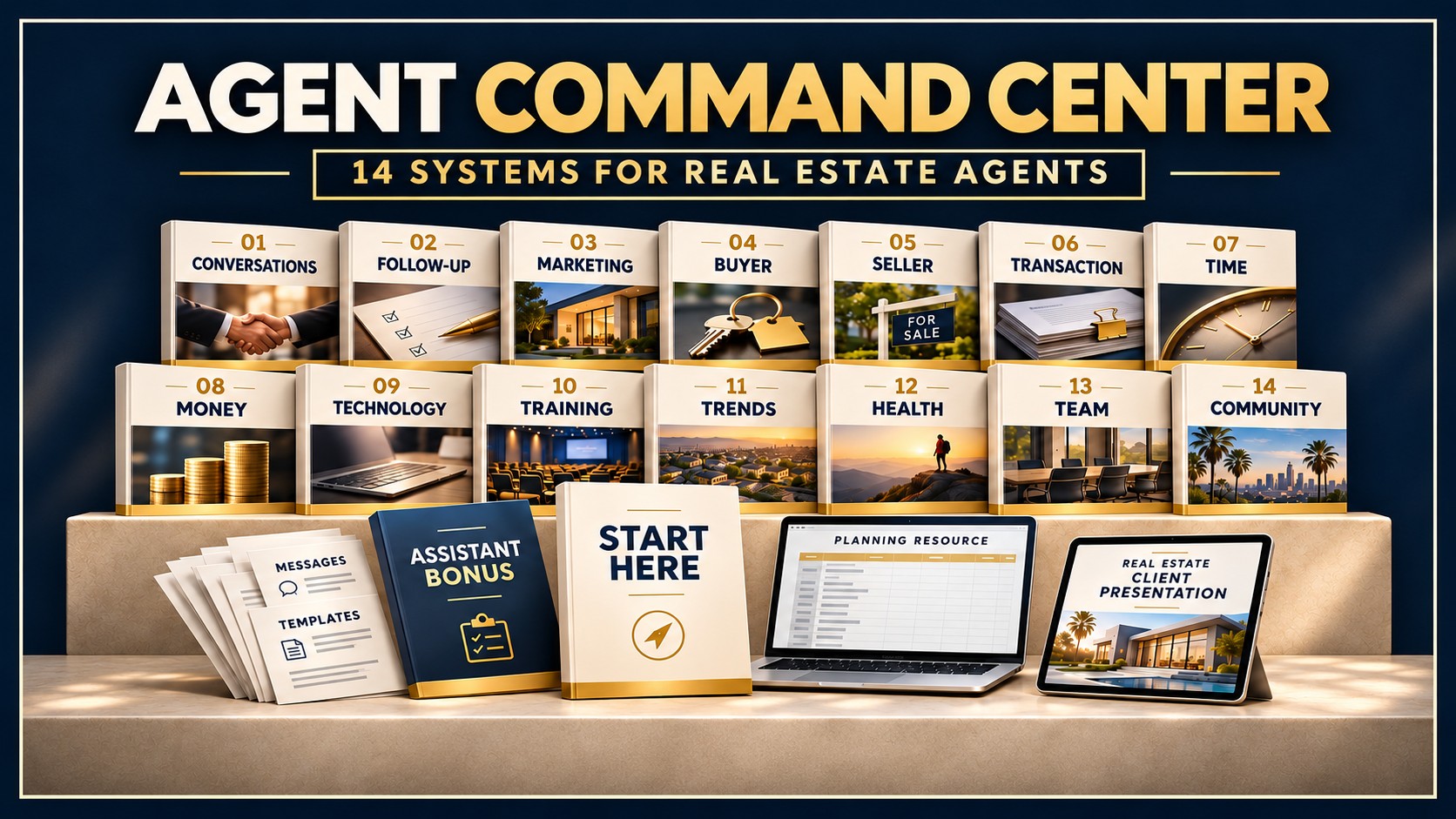
If you’d like to start with the editable deck, it’s in the Seller Kit inside Agent Command Center, along with a seller and property brief and a preparation and launch plan. You can also see how the Seller System fits alongside Conversations, Follow-Up, Marketing, and the rest of the 14 real estate business systems.