Reviewed October 12, 2026. Original publication date retained.
Plan your search strategy around useful local information and accurate business details. Excelling at SEO helps new clients find you using Google and other search engines, so this goal directly supports business goals.
One possibility is to develop your backlinking strategy with local directories. That approach can increase the chances of people in your area finding your real estate website and perceiving it as authoritative.

Understanding Backlink Profiles in Real Estate
Begin by examining your backlink profile to assess its current state and areas for improvement. Backlinks occur when other websites include yours as external links. This practice is an SEO signal that designates authoritative content. Your backlink profile is the breakdown of the number and quality of backlinks associated with your real estate site.
Since your website is the initial way many people learn about the business and its offerings, driving traffic and positioning it as a high-quality option helps grow your client roster.
Google assesses your backlink profile when determining whether your site is significantly authoritative to rank highly in search engine results. A strong backlink profile has many organic, high-authority links relevant to your business and industry.
Anchor text should describe the link naturally in its context. Do not prescribe keyword-rich wording or require exact-match anchors to manipulate rankings.

What Are Local Directories?
Local directories are compilations of information for particular areas. For example, a relevant Florida directory can help people looking for services in that market find a Florida business, including people relocating from elsewhere. Relevance and usefulness matter more than submitting everywhere; a directory listing does not automatically improve search rankings.
Business organizations, tourism websites and city-based blogs are potential sources of well-maintained local directories. Besides increasing the directory publisher’s authoritativeness, local directories get your real estate agency listed on multiple sites frequented by people who may need your services now or in the future.
Someone who recently moved to the area may not want to spend hours online learning about the most reputable service providers. Local directories prevent that outcome by providing hand-picked links. Even if the directory manager does not have direct experience with your real estate agency, something about how you presented your offerings convinced them the business is worth including in the directory.

Improving Your Real Estate Agency’s Reach With Local Directories
Choose directories that people considering your locations and services actually use. Whether you help with relocation, rural properties or commercial space, accurate business information and a useful website give readers a clear next step. A broad population forecast does not establish whether a particular directory will bring qualified inquiries.
How Local Directories Support That Goal
Directories connect you to parties who have demonstrated an interest in your offerings and are motivated enough to take the next step by contacting you after finding your details.
A local directory presence increases brand awareness because people browsing the content are more likely to view the listings as worthwhile. They learn to recognize your business name and simultaneously view it as trustworthy.
Think of local backlinks as nods of approval from those in your community. Directories guide people through their searches by helping them make the most of their time. When someone sees your listing, they may add your business to their shortlist based on its presence, especially if the party maintaining the directory has earned their trust.
Including Local Directory Efforts in a Larger Technology Transformation
You may have decided to scale up your real estate business’s use of technology. Steady implementation can help you stay competitive and nimble while demonstrating your skills to get the best results.
Consider prioritizing local directories as you explore the most effective ways to rely on technology over time. That goal can help your business operate efficiently by giving your staff more time to devote to people already highly interested in your services.
Explore complementary tools and efforts to capitalize on new leads found through local directory campaigns. For example, website chatbots could answer common questions those parties have, such as your office location and hours. Additionally, a drip marketing campaign that sends emails to prospects based on previous actions or other distinctive characteristics can help you capture and keep their attention.
Before finalizing how your real estate businesses will use technology this year, talk to your staff to learn about their current workflows and challenges. Review your proposed local directory strategy and get their input on how strategically applied technologies could achieve their goals. Their feedback can guide your decisions, including how much to spend on technological additions and how to enhance processes with the new tools.

How Can You Get Backlinks From Local Directories?
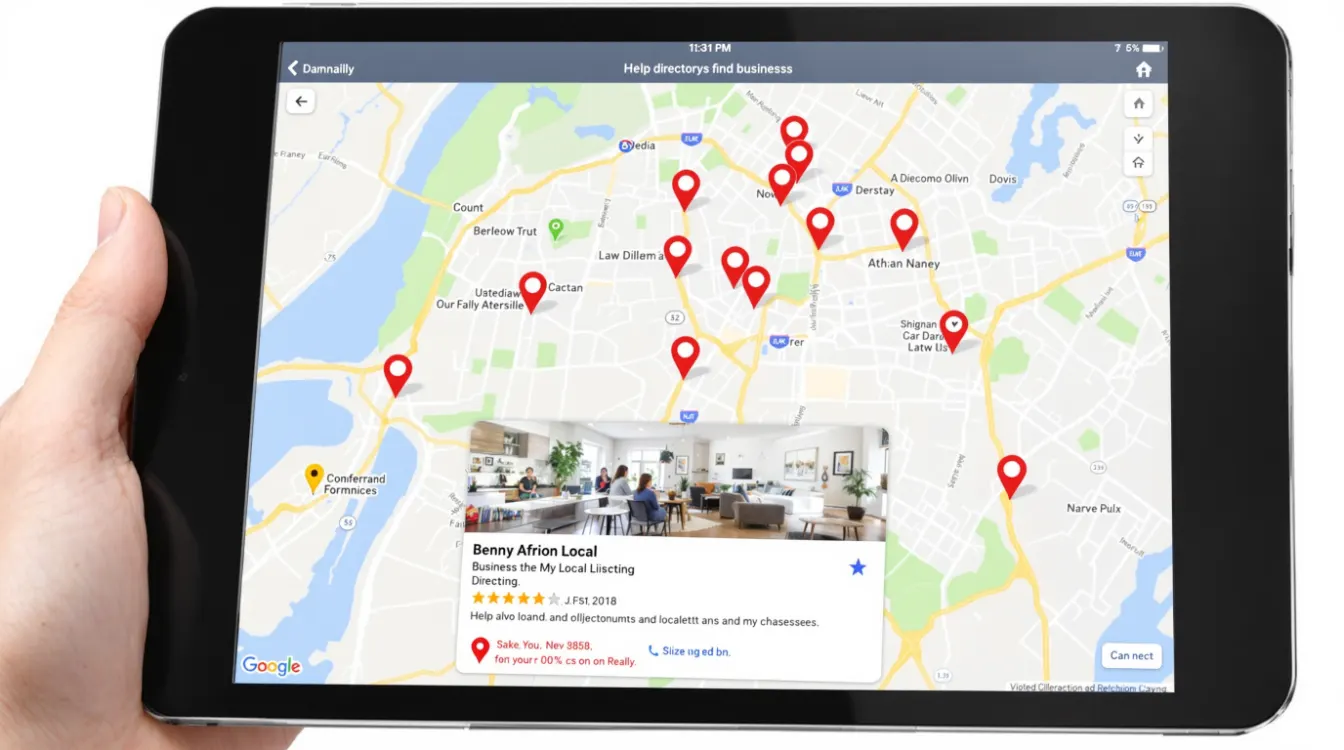
Before looking for local directories, set up or review your agency’s Google Business Profile listing. It’s essential for helping potential clients learn about your real estate business because it includes your location, hours, website and reviews. Content from the Google Business Profile appears when people search with the phrase “near me” on Google.
1. Build a List of Potential Directories
Create a list of all the places that may list real estate agencies. In addition to local entrepreneur organizations, universities, government offices and recruitment agencies may also have local directories on their sites. As you develop and perfect this process, look for opportunities to integrate automation and eliminate time-consuming manual processes of finding local directories.
2. Engage With Local Bloggers
Another option is to contact local bloggers after identifying why your business matters to them. Perhaps you follow a well-established blog that highlights local sustainability. Your real estate agency may have recently installed solar panels or become a paper-free office, which could be noted in the blog’s roundup of notable impacts and the companies behind them.
3. Diversify Your Outreach
Consider splitting your efforts by contacting consumer-based directory sites — such as Yelp — and expanding your professional network through LinkedIn or membership-based organizations for real estate professionals. Covering both bases increases your visibility.
Work with local businesses where the collaboration genuinely helps readers. Do not build reciprocal-link arrangements primarily to manipulate rankings. Community events and useful local contributions can earn editorial coverage without a promised link exchange. Google’s link-spam policy.
4. Organize Application Information
Most link directories require interested parties to fill out forms for consideration. Before making your first submission, collect the information you may need to provide and keep it in an easily accessible place. This could include your establishment date, real estate focus, awards and certifications.
Keep a list of where you have applied and when. If available, include the typical approval timeline. Track progress and identify the directories you need to follow up with if too much time has passed since you applied.
5. Monitor Referrals
Local directory listings can increase referrals. Your Contact Us form should already have a field where people can mention how they heard about your business. Consider tracking the number of leads that reached your website through local directories. If the number steadily rises or remains consistently high, that is a strong sign to continue your strategy.
6. Review Your Backlinks Periodically
Receiving occasional low-quality or spammy backlinks is inevitable. Reviewing your backlink profile is an excellent way to ensure that most have desirable characteristics. If you notice a troubling pattern, investigate its source. Adding directory listings does not undo bad links or prove an SEO recovery.
Differentiating Between Good and Bad Local Directories
Scrutinize every directory to determine its applicability to your real estate business. Submitting your details to everyone you find can be tempting, but you’ll get much better results with tailored efforts.
Ask yourself these crucial questions:
- Is the directory’s name reputable?
- Does my target audience visit it?
- Would the listing boost or tarnish your reputation if viewers connected your business to the directory name?
Since relevancy is critical for backlinking success, narrow your scope to prioritize the directories people interested in your services would likely visit. For example, a directory that segments by business category will likely be more effective than one that primarily lists businesses that support new parents.
Review the local directory’s application and approval processes. If the parties overseeing everything approve every submission, they may not hold the businesses to high standards. Google identifies low-quality directory links created to manipulate rankings as link spam. An unsolicited bad link does not automatically mean your site has a penalty. Check who maintains the directory and whether its listing would help real readers.
A local real estate blogger with 10 years of proven experience might run a local directory to increase their authoritativeness. Being included in it increases your authority due to the connection to the trusted blogger.

Create the Foundation for Local Directory Success
The real estate industry’s competitiveness requires strategic ways to increase visibility while attracting new clients. Local directories could provide extra momentum to support those goals.
Follow these tips and develop a system for tracking how many people find your business through local directories. Monitor your backlink profile to see how many high-quality sites link to yours throughout the year. Those metrics will motivate you and reveal whether to adjust your approach to optimize results.
Frequently Asked Questions (FAQs) About Leveraging Local Directories for Backlinking
What are local directories, and why are they important for SEO?
Local directories organize businesses by location or category. A useful listing can help readers find accurate details and visit your site. Some listings provide links, but quality, eligibility and link treatment vary; placement does not guarantee rankings.
How do local directories improve my website’s backlink profile?
A relevant directory may add a useful reference to your site. Assess the actual public listing, audience and link instead of treating every directory link as an endorsement or ranking improvement.
What are some high-authority local directories for real estate businesses?
Places to evaluate for relevant business or practitioner listings include:
- Google Business Profile (formerly Google My Business)
- Zillow
- Realtor.com
- Yelp
- Chamber of Commerce websites
- Local government and tourism directories
- Industry-specific directories like Homes.com
How can I find the best local directories for my business?
Look for directories used by your local audience and check who maintains them. Confirm eligibility, the public listing, fees and whether people can reach the correct website. Third-party “domain authority” scores can be a research aid, but they are not Google’s own ranking score.
Does listing my business in too many directories hurt my SEO?
The concern is low-quality, manipulative submissions, not a universal directory-count limit. Avoid mass-submission schemes, paid ranking promises and irrelevant link exchanges. Do not assume an unsolicited spam link means your site has been penalized.
How can I track the performance of my local directory backlinks?
You can track the performance of your local directory backlinks using:
- Google Search Console (to monitor backlinks and search traffic)
- Google Analytics 4 (to track referral traffic from directories)
- SEO tools like Ahrefs, Moz, or SEMrush (to analyze backlink quality and growth)
How long does it take to see SEO benefits from local directory backlinks?
There is no fixed three-to-six-month result or guarantee. Indexing, referrals and search performance vary. Record when a listing goes live, then measure actual visitors, inquiries and qualified business over time.
Can I get backlinks from local directories without paying?
Some services offer free eligible listings: Google Business Profile has no listing fee, and claiming a Yelp page is free. A chamber listing may require membership, and other directories may charge. Check current terms and whether the public listing actually links to your site. Yelp claiming guidance.
What information should I include when submitting my business to a local directory?
When submitting your business to a directory, ensure you include:
- Business name (exactly as it appears elsewhere online)
- Accurate address or permitted service-area details, and phone number
- Website URL
- Business category and description
- High-quality images
- Customer reviews (if applicable)
How can I prevent my business from getting duplicate or incorrect listings?
To prevent duplicate or incorrect listings:
- Claim and verify your listings on major directories like Google Business Profile.
- Use a consistent name, address, and phone number (NAP) across all platforms.
- Regularly audit your listings using tools like Moz Local or BrightLocal.
- Request corrections or removal of duplicates if errors are found.
Check the listing before counting it
Use the right practitioner or firm identity and eligible address details.
Open the actual listing and check the website link.
Confirm membership, fees and any paid-placement conditions.
Track real referral visits and inquiries, not a promised ranking lift.
Follow Google’s business-representation guidelines for eligibility and service-area addresses; do not publish a private home address simply to match every directory.