
Reviewed October 12, 2026. Original publication date retained.
Competition in Real Estate Is Fierce
Real estate is a competitive business. Licensing counts change, and a license count is not a count of full-time competitors in your market.
With such a saturated market, setting your business apart is crucial.
A custom inbound marketing strategy is essential, with your website serving as the central hub. Tailored to your specific real estate niche, a custom website can significantly enhance your business.
The Evolving Housing Market
The housing market has undergone significant changes in recent years. Today’s buyers are well-informed, utilizing the internet to search for homes and research neighborhoods before contacting a real estate agent. To stay competitive, you must have a modern, mobile-friendly website that allows clients to find you and search properties with ease.
An outdated or non-responsive website can lead to lost clients. Don’t fall behind—discover below why creating a custom website is vital in the real estate industry and how to make yours convert.

Benefits of a Custom Website
Own Your Platform and Content
While there are numerous real estate website builder tools promising quick setup and instant lead generation, they come with several drawbacks:
-
Ownership and portability: Check the contract for domain ownership, content export, design licenses, data access and migration costs. Hosted builders differ; self-hosted WordPress gives you control of your installation, but third-party licenses and services still have terms.
Generic Designs Don’t Build Trust
-
Generic Design: These cookie-cutter websites lack individuality and offer limited flexibility.
SEO Strength Comes from Control
-
SEO Limitations: While some of these sites rank well due to the parent company’s investment, your individual site may not retain its SEO advantage if you leave their service. It’s akin to having a page on a platform like Facebook—you benefit from their brand but never truly own your presence.
Why First-Party Data Matters More Than Ever
-
First-party data: Build direct relationships through permission-based email signups and inquiries. Third-party cookies have not universally disappeared; Chrome retained user choice. Analytics and remarketing still require appropriate consent, privacy disclosures and platform compliance.
Rising Costs of Third-Party Platforms
-
Platform costs: Compare your actual lead-platform contract with the cost of your own website, traffic and follow-up. Prices, exclusivity and referral fees vary. Direct website inquiries reduce dependence on a platform, but a custom site does not make traffic or leads free.
Incorporating the G.L.A.M.R. framework into these websites is challenging:
-
G – Generate Referrals
-
L – Legitimize Your Business
-
A – Authorize Yourself as the Local Expert
-
M – Multiply Your Web Presence
-
R – Residence, Own Your Website
A custom website can give you greater control when your domain, content, hosting access and licenses are documented. You can tailor it to match your branding—logos, colors, fonts—and add functionalities like online appointment scheduling or client chat features. This level of customization ensures your website stands out and effectively serves your business needs.

Target Your Niche
When deciding to build your custom website, you first need to determine your audience. Do you specialize in luxury homes, starter homes, relocation or investment properties?
Your website’s look, feel, and language must all target a specific audience, or niche. To do that, you need to know who your perfect client is—your buyer persona. Once you determine that, you can start building.
The imagery, colors, and even the tone of your new website must reflect your audience and be identifiable to them. A first-time buyer guide needs different information from a guide to high-end modern homes. Focus on the property and the client’s stated needs.
Your aim is to create a cohesive website that checks all the boxes for your target audience.
Even after you determine your target audience, you will be able to group your clients further into sub-segments. When you follow up on real estate leads with promotional emails, send each group custom emails.
Tailor permission-based follow-up to stated interests, search criteria and stage in the process. Keep housing opportunities open; do not use protected characteristics or proxies to exclude people. Follow fair-housing rules and housing-ad platform restrictions.

Is WordPress the Right Platform?
Free and Scalable for Any Size Business
WordPress is the number one CMS system on the market and is used by small companies and huge corporations alike. There are many reasons it is so popular, but the first and foremost is that it’s free.
You don’t pay anything for the core program. Once you get it installed, you can use real estate plugin add-ons to enhance and extend the functionality, and you can install one of thousands of themes to change the look and feel within minutes.
WordPress can grow with your business, but hosting, integrations, maintenance and workflow needs still require review.
Many themes are free; paid themes have varying licenses, renewals and support. Budget for hosting, IDX, maintenance and implementation as well as the design.
Built-In SEO Capabilities
WordPress is also great for SEO and online marketing. Plenty of plugins like Yoast make it easy to customize your pages with search engine-friendly practices.
Open Source Means Full Control
Another great reason to use WordPress for your custom website is that it is “open source.” Open source means that if you don’t like something, your programmer can change the code instantly.
Easy to Use, Even for Beginners
It’s also easy to use and extremely flexible as a blog or corporate website.
You can create landing pages in minutes, and even if you are not computer savvy, you can easily learn how to add content to your pages.
WordPress is flexible and has a large support community. Keep core software, themes and plugins maintained, use appropriate access controls, and test backups and updates.

WordPress Can Connect You With Buyers and Sellers
Blogs Build Authority
WordPress was originally developed as a blogging platform and remains a great way to connect with potential customers. A real estate blog lets you get your message out so you stay ahead of the competition and develop a strong online presence. It’s also one of the best ways to establish yourself as the local area expert.
Adding a video to a blog post along with accompanying text is a powerful SEO tool to help you rank with Google. The video can help readers understand the topic; time on page is not a documented direct Google ranking factor. The added text gives Google something to index. Not sure what to write? Consider using a transcription of the video.
Keep It Fresh with Video Channels
If you already have a YouTube presence and want to stream the latest videos to your WordPress site, there are plugins to help with that. This approach can help keep your site current and fresh. A dedicated video page on your website is like having your very own streaming TV.
Videos can improve the reader’s experience. Use descriptive text, accessible captions and appropriate video metadata; engagement alone does not guarantee rankings.
Need some inspiration? Take videos of the areas you serve, discuss current local real estate trends, or educate your customers with walkthroughs, interviews, or quick tips.
Podcasting Builds Loyalty on the Go
Podcasting remains a useful format. People are busy — sometimes too busy to watch a video. Podcasting is a great way to connect with future customers while they’re driving, walking, or working.
If you already produce a podcast, embed episodes directly on your website. You can also cross-promote episodes on blog posts or property pages to highlight your authority and market expertise.
Embracing AI and Interactivity today
Smart Features That Engage and Convert
AI tools can support website questions and scheduling. Check answers against your actual services, disclose limitations, protect client information and provide a clear route to a person.
Home valuation tools, mortgage calculators and IDX search can help visitors. Explain estimates and limitations, test the complete inquiry route, and measure conversions rather than assuming a ranking benefit.
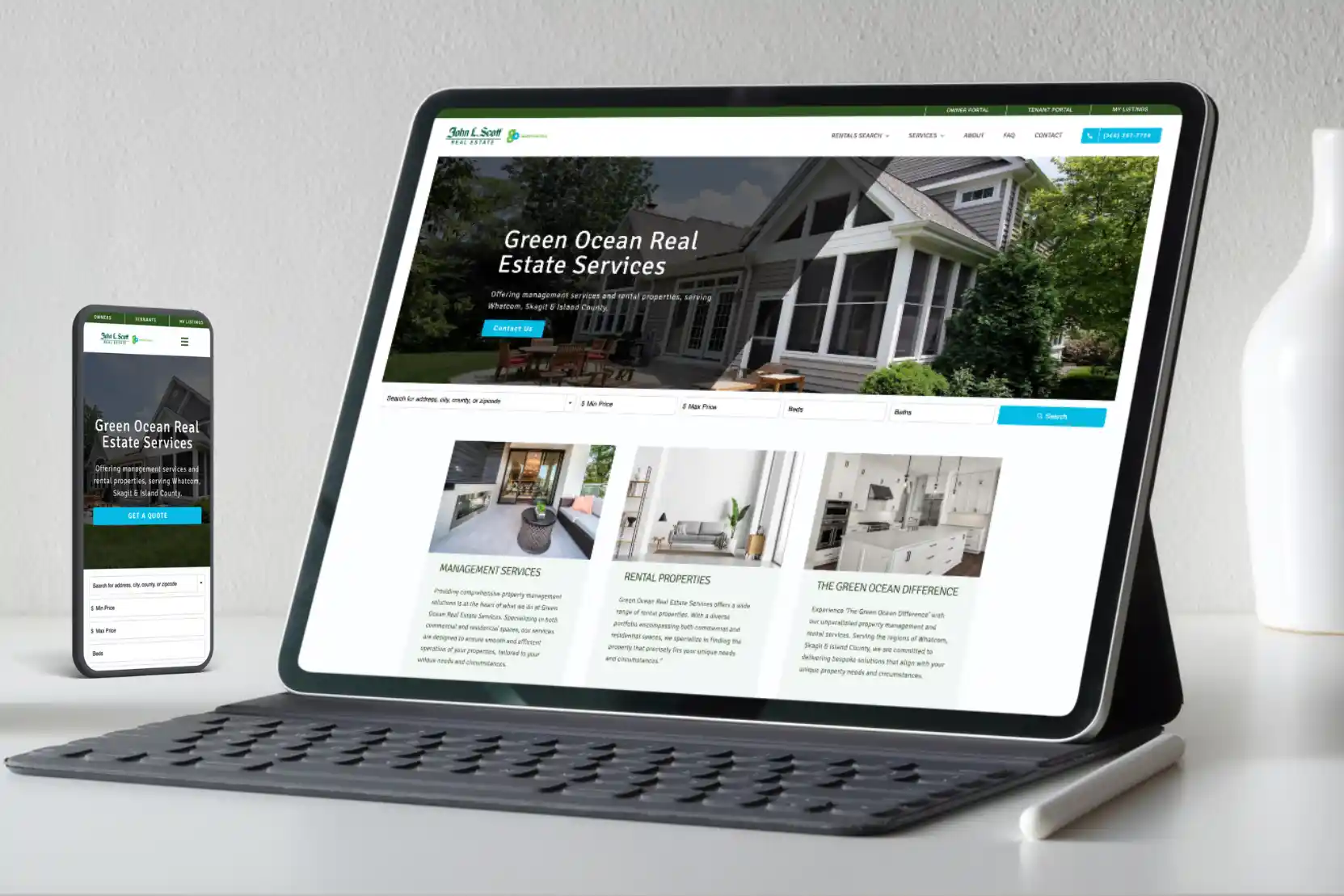
Choose tools that your clients can use and that your team can maintain. A custom-built site lets you implement them in a way that matches your brand and workflows, giving you a competitive edge over agents using rigid, template-based platforms.
Build the Best Real Estate Website Possible
As you consider developing your custom real estate website, here are a few tips to keep in mind. First, your site is like your office manager — it’s often the first impression a client has of you.
Make that impression count.
Clients will usually look you up on Google to find out more about you or the homes you’re selling. Make it easy for them to get in touch — include clear ways to reach you via phone, email, or text directly from the homepage.
Use an approved IDX provider and your MLS’s required permissions, display rules and fees to offer property search.
Don’t skimp on your About page — this is your chance to build trust and share your story. Show off your expertise and let visitors know why you’re the best choice in your market.
Consumers love FAQs. Dedicate a page to frequently asked questions — they help build confidence, improve user experience, and are excellent for SEO.
And if you’re open to it, consider adding a live chat feature. More buyers today expect quick answers — a real-time messaging option makes your website more interactive and helps you stand out.
Summary
Be sure your new site looks great and works on mobile devices.
Use an SEO plugin like Yoast SEO (one option to evaluate) to make sure your pages are optimized to rank well on Google.
And most importantly, use high-quality, professional images throughout. Photos and video are still your best marketing tools. Nothing sells a property quite like a gorgeous image or a quick walkthrough tour.
Frequently Asked Questions About Custom Real Estate Websites
Why should a real estate agent build their own website?
Building your own website can give you greater control when ownership, licenses and portability are clear. You can design it to match your brand, create targeted content for your ideal clients, and generate leads without relying on expensive third-party platforms.
Is it better to use a website builder or hire someone for a custom site?
Choose the option that fits your workflow, budget and required control. Compare domain ownership, exports, integrations, performance, support and exit terms. A custom site can offer flexibility, but neither approach guarantees growth or rankings.
How much does it cost to build a custom real estate website?
Request an itemized quote for design, migration, hosting, IDX, licenses, support and maintenance. Scope and renewals vary too much for one universal price range.
What are the SEO benefits of a custom website?
A custom site allows you to optimize every page for local keywords, create blog content that ranks in search engines, and earn organic traffic. The useful question is how much control your specific platform gives you over on-page SEO, performance, structured data and internal links.
Can I generate leads from my own website?
Yes. With the right setup, your website can become your top lead generator. Use IDX search tools, lead magnets, contact forms, AI chatbots, and landing pages to capture and convert visitors into clients — with costs and referral obligations determined by your actual services and contracts.
Do custom websites help with branding?
Absolutely. Your website reflects your brand — from your logo and colors to your voice and values. A custom site lets you tell your story, showcase testimonials, highlight community knowledge, and build trust with your audience.
References: Chrome’s cookie approach · Google’s helpful-content guidance · HUD’s 2024 digital housing advertising guidance.



How much does it cost to build a real estate website?
The price varies depending on what you are looking for. Some of my competitors charge up to 10K and a few hundred a month. You can create a free WordPress or Wix site. We charge between $500 and $2,000 and about $100 month. Do you need a site?
When branding your real estate business, would you suggest branding with your own name or with a business name? Thank you
What do you mean by your business name. If you mean the name by which you call your personal real estate business… then your business name. If you mean your brokerage’s business name, then your name. But most agents business name is their name. Example: Brittany Dawn Homes.
This is some solid info that more agents need to grab a hold of! They have no clue what they’re missing out on! Great post!
Thanks Allison